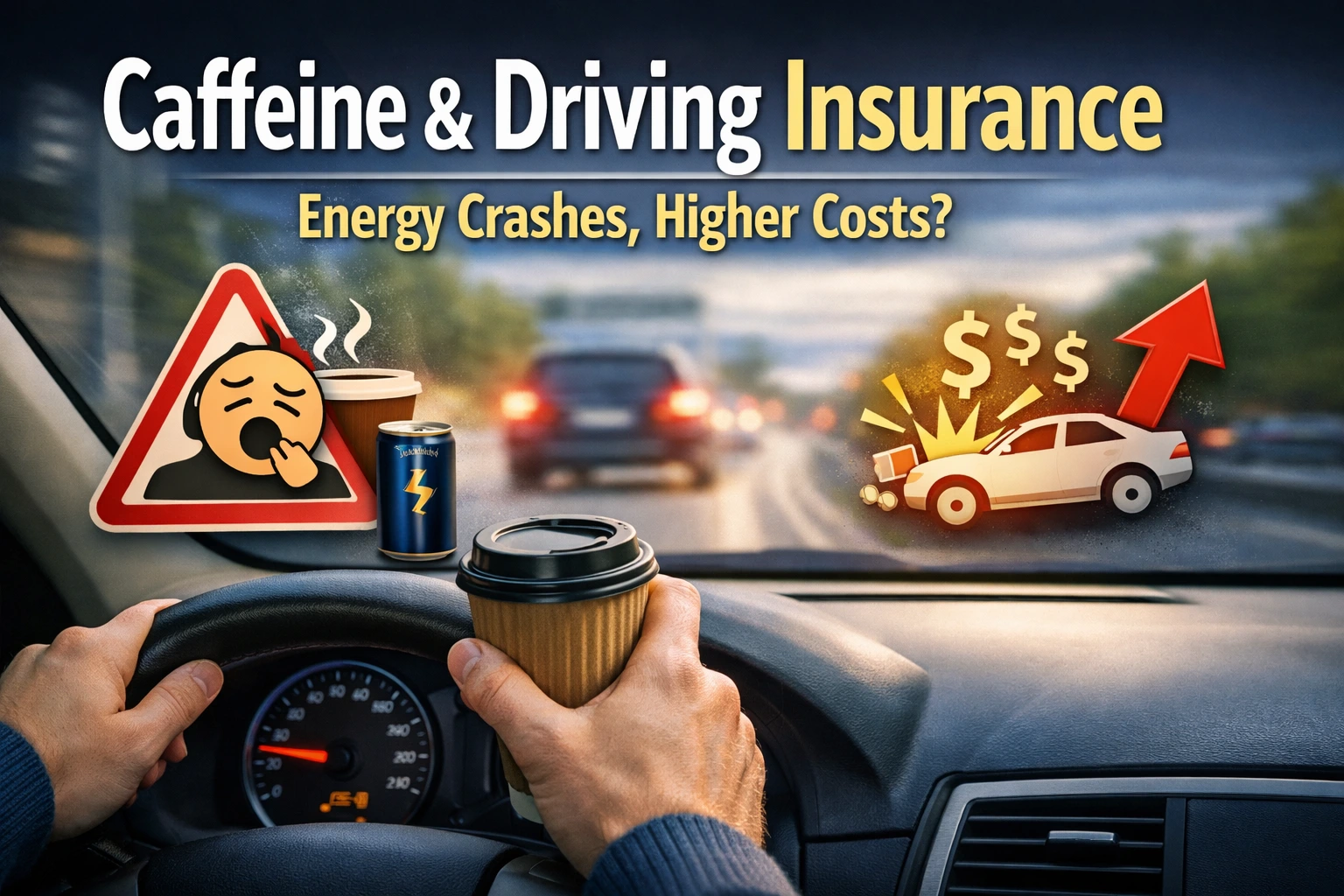
Many drivers turn to coffee or energy drinks to stay alert on the road, but new research suggests that caffeine misuse could quietly increase accident risk — and potentially influence caffeine and driving insurance outcomes.
A study by car insurance comparison provider MoneySuperMarket explored how caffeine habits affect driver behaviour. It found that more than a third of motorists consume caffeine before driving, while nearly half rely on caffeinated drinks during longer journeys.
Although caffeine can improve concentration in the short term, consuming too much can trigger a "caffeine crash" — a sudden drop in energy, alertness, and mood. These effects may impair reaction times and judgement, increasing the likelihood of incidents that can affect insurance cover.
Key Finding
More than a third of UK motorists consume caffeine before driving, while nearly half rely on caffeinated drinks during longer journeys.
How Caffeine Consumption Impacts Driving Safety
Caffeine stimulates the central nervous system, helping drivers feel awake and focused. However, its effects are temporary. When caffeine wears off, drivers may experience:
The study found that 28% of drivers felt shaky or on edge after consuming caffeine, which can be just as dangerous as tiredness behind the wheel.
From a road safety perspective, this matters. Driver fatigue is believed to contribute to around 20% of serious road accidents, making caffeine misuse a hidden risk factor. For more information about managing driving risks, see our ultimate guide to car insurance in the UK.
Why Caffeine and Driving Insurance Are Linked
There is no legal limit on caffeine consumption before driving, unlike alcohol or drugs. However, insurance consequences don't depend on legality alone — they depend on risk and claims history.
Even a minor collision caused by reduced alertness can lead to:
- Higher insurance premiums at your next renewal
- Loss of no-claims discounts built up over years
- More expensive renewals for several years
- Increased scrutiny from insurers
As insurers increasingly assess behavioural risk factors, lifestyle habits that influence concentration — including caffeine intake — are becoming more relevant to overall risk profiling. Understanding why car insurance costs are rising in 2026 can help you make smarter decisions about protecting your premiums.
A Widespread Lack of Awareness Around Caffeine Limits
One of the most concerning findings from the research was how few drivers understand safe caffeine intake levels.
Caffeine Awareness Statistics
The recommended maximum for adults is 400mg per day, yet many popular drinks contain a large proportion of this amount in a single serving. Large coffees and energy drinks can deliver up to 75% of the daily limit at once, making it easy to overconsume — especially on long journeys.
What This Means for Drivers and Insurers
From an insurance standpoint, caffeine misuse is part of a broader discussion around fatigue management and accident prevention.
While insurers don't currently ask about caffeine habits directly, claims data consistently shows that tired or distracted driving leads to higher costs. As a result, insurers are increasingly focused on education and prevention — encouraging safer habits to reduce claims frequency.
The Takeaway for Drivers
Caffeine should complement rest, not replace it. Regular breaks, hydration, and adequate sleep remain the most reliable ways to stay alert and protect your insurance record. Learn more about comparing car insurance quotes to find the best cover for your needs.
FAQs: Caffeine and Driving Insurance
Final Thoughts: Smarter Driving Protects Your Cover
Understanding the relationship between caffeine and driving insurance helps drivers make better choices behind the wheel. While caffeine can be useful in moderation, relying on it too heavily can increase accident risk — and long-term insurance costs.
At Utterly Covered, we believe informed drivers are safer drivers. Managing everyday habits like caffeine intake is a simple but effective way to protect both your safety and your insurance cover.
About the Author: Francesca Cloudy, FCA-registered insurance adviser with 15 years' experience analyzing UK life insurance policies. Data sourced from Legal & General, ABI, and ONS 2024-2025 reports.